Reviewed by Mattie Clear, Head of Research and Engagement & Assistant Professor, James Madison University Libraries, Harrisonburg, VA [PDF Full Text]
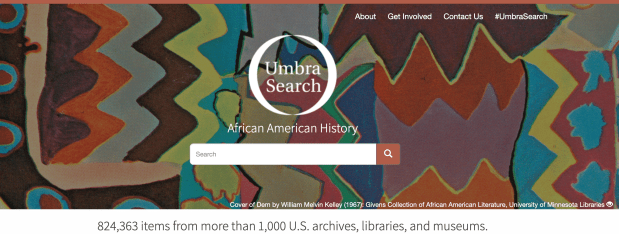
Figure 1. Screenshot of the homepage of Umbra Search, https://umbrasearch.org/.
Umbra Search: African American History is a digital resource created in 2014 by the Givens Collection of African American Literature at the University of Minnesota Libraries’ Archives and Special Collections in collaboration with the Penumbra Theatre Company. The resource was funded by the Institute of Museum and Library Services (IMLS), the Doris Duke Foundation, and the Council on Library and Information Resources (CLIR) from 2014 to 2017. Much of the content included in Umbra Search is drawn from the Digital Public Library of America’s (DPLA’s) collections. For its efforts to make African American historical materials more accessible, Umbra Search received the 2017 Award for Access from the Center for Research Libraries.[1]
Though the current version of Umbra Search began in 2014, it evolved from a 2012 initiative focused on understanding the role of theater archives in documenting history. The inspiration came from the grant project “Preserving the Ephemeral: An Archival Program for Theater and the Performing Arts,” originally developed as “The African American Theater History Project,” also funded by IMLS. This early work emphasized the archival needs of theaters—especially theaters of color—and laid the foundation for an aggregator uniting documents and artifacts pertaining to African American history.[2]
The primary goal of Umbra Search is to make African American history more accessible by serving as a centralized entry point to digitized materials from more than 1,000 libraries and archives across the country. Its name pays tribute to the 1960s Umbra Society, a precursor to the Black Arts Movement. As an aggregator, Umbra Search does not host content directly but instead links users to the holding institutions, functioning much like DPLA.[3]
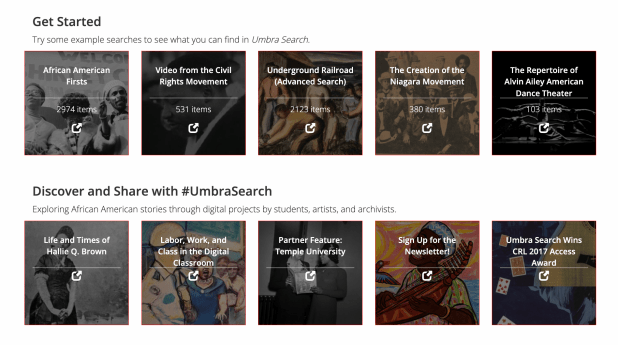
Figure 2. Screenshot of Sample Searches and Digital Projects on the homepage of Umbra Search, https://umbrasearch.org/.
Umbra Search delivers on its promise by allowing users to search for African American history materials in one place. Beyond standard search capabilities, it encourages deeper engagement through curated sample searches and highlights digital projects created by students and scholars. These sample searches span both topics and formats—for example, “African American Firsts” or “Video from the Civil Rights Movement”—and are built using advanced search techniques that filter by keyword tags and formats. The website also allows users to explore the collection without a specific topic in mind.
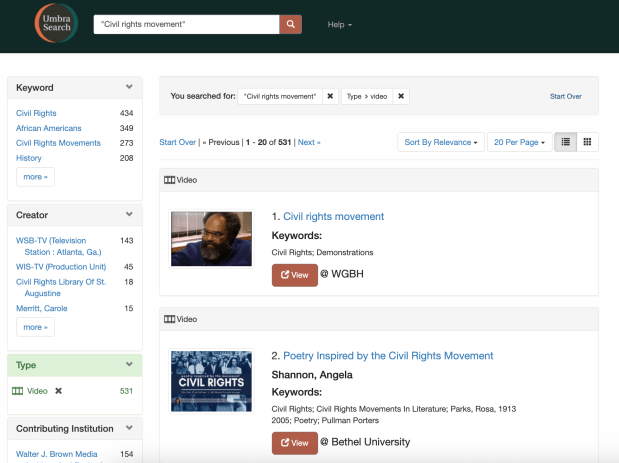
Figure 3. Screenshot of Sample Search for “Video from the Civil Rights Movement”
Clicking on a sample search displays aggregated resources, each showing an item’s title, keywords, format, and contributing institution. Selecting an item provides a description, related materials, and a link to view the original item on the host institution’s site.
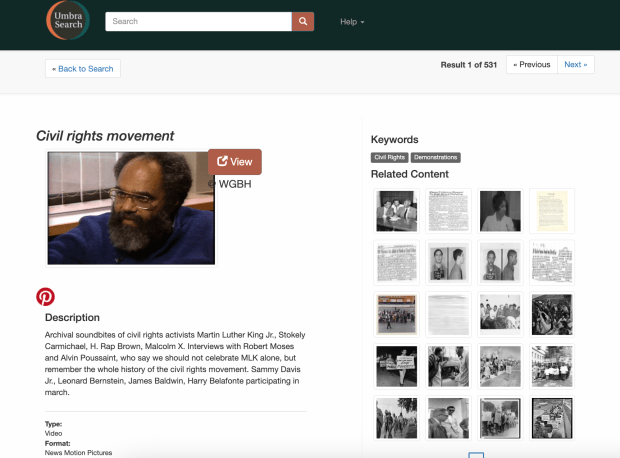
Figure 4. Screenshot of a video contributed by WGBH entitled “Civil rights movement,” https://umbrasearch.org/catalog/31029d8c6fd00f4f56b3124c9d6053267bf02f7f.
For instance, selecting the first result titled Civil rights movement from the sample search “Video from the Civil Rights Movement” reveals that it is a compilation of archival sound bites by civil rights activists. It was contributed by WGBH, a public television and radio station located in Boston, MA, and harvested from Digital Commonwealth. To view the item, users must click the “View” button, which opens a new tab directing them to the “Boston TV News Digital Library: 1960–2000” website.[4]
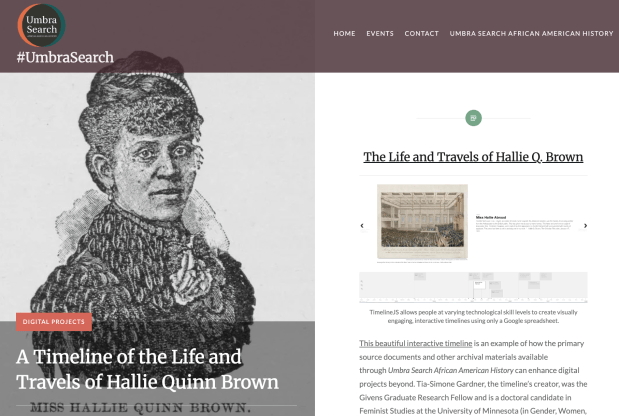
Figure 5. Screenshot of the Digital Project “A Timeline of the Life and Travels of Hallie Quinn Brown,” https://umbrasearchblog.org/2016/10/31/a-timeline-of-the-life-and-travels-of-hallie-quinn-brown/.
In contrast to the sample search function, the digital projects section offers curated information on specific topics. One example, “The Life and Travels of Hallie Q. Brown,” showcases how Umbra Search materials can be integrated with free digital scholarship tools such as Knight Lab’s TimelineJS. The page links to a visual timeline built using images from Umbra Search.[5]
While Umbra Search fills a vital need for free, accessible African American history resources, its aggregating function also poses challenges. As an aggregator, it relies on external sites to host content. This can lead to broken links, something I personally encountered. I searched for content from my home institution, Washington and Lee University, which contributes to DPLA. While materials from our collections appeared in Umbra Search, none of the links to access the materials worked due to a repository migration. This issue is not unique to Umbra Search; it is a common limitation of any aggregator that does not host content directly.
Another concern is sustainability. Since the project’s grant funding concluded in 2017, it is unclear whether the collections have been actively maintained or expanded since then. The lack of updated information about ongoing work may impact long-term reliability and user trust.
Despite these limitations, Umbra Search remains a valuable tool for archivists, educators, researchers, and anyone interested in African American history. Its ease of use, free accessibility, and centralized search functionality make it especially useful for classroom assignments, independent research, or community history initiatives. The ability to access such a vast collection without needing institutional credentials is a major strength.
The project’s documentation expresses hope that select content might be hosted directly in the future.[6] I share that hope and believe continued funding and support would allow this vital resource to grow and thrive. Umbra Search represents an important step in preserving and sharing African American history, and I look forward to its continued evolution.
[1] “About Umbra Search,” https://umbrasearch.org/pages/about (accessed September 10, 2025); “Project Documentation,” Umbra Search African American History, https://umbrasearch.org/pages/documentation (accessed September 10, 2025).
[2] “History: Inspirations and Aspirations,” Umbra Search African American History, https://umbrasearch.org/pages/history (accessed September 10, 2025).
[3] “About Umbra Search,” https://umbrasearch.org/pages/about (accessed September 10, 2025).
[4] WGBH, “Civil rights movement,” Umbra Search African American History, https://umbrasearch.org/catalog/31029d8c6fd00f4f56b3124c9d6053267bf02f7f (accessed September 20, 2025).
[5] “Digital Projects: A Timeline of the Life and Travels of Hallie Quinn Brown,” Umbra Search African American History, https://umbrasearchblog.org/2016/10/31/a-timeline-of-the-life-and-travels-of-hallie-quinn-brown/ (accessed September 20, 2025)
[6] “Get Involved,” https://umbrasearch.org/pages/participate (accessed September 20, 2025)
 The American Archivist Reviews Portal